-
Cleaner air with EVs measured
The focus of cleaner technologies like electric vehicles is usually on reducing greenhouse gases, which is, indeed, super important. But don’t forget that burning stuff for energy also creates plain old dirty, unhealthy air. So when enough people switch away from old-fashioned gas cars in an area, there should be a measurable improvement in air quality, right? The answer is yes, per recent research:
The study, just published in The Lancet Planetary Health and partly funded by the National Institutes of Health, adds rare real-world evidence to a claim that’s often taken for granted – that EVs don’t just cut carbon over time, they also improve local air quality right now.
They correlated California Dept. of Motor Vehicles EV registrations with satellite data showing nitrogen dioxide (NO2) pollution.
“We’re not even fully there in terms of electrifying, but our research shows that California’s transition to electric vehicles is already making measurable differences in the air we breathe,” said lead author Sandrah Eckel, PhD, an associate professor at the Keck School of Medicine. …They also saw the expected counterexample: neighborhoods that added more gas-powered vehicles experienced increases in pollution. The findings were then replicated using updated ground-level air monitoring data dating back to 2012.
This is why you, me, and everyone should switch to EVs, and why infrastructure like charging stations is worth investing in, and yet another way the Trump administration is undermining public health (by halting the Biden-era EV rebates).
-
Thanks to Trump, mercury is surging back
From the New York Times, another story to keep in mind when the Trump administration tries to describe coal as “clean” or “beautiful” (or trots out their stupid little mascot, “Coalie”): As Coal Rebounds, More Toxic Mercury Is in the Air (gift link).
Coal-fired power plants across the country released more mercury last year as power demand surged, reversing a yearslong downward trend in the emissions of a toxic metal that impairs brain development.
Mercury emissions from coal-burning plants increased by roughly 9 percent in 2025, compared with a year earlier, totaling more than 4,800 pounds, according to a New York Times analysis of data collected by the Environmental Protection Agency.
At the same time, the Trump administration launched a series of moves that experts say may make those emissions climb even higher this year and beyond.
Please remember: mercury is an extremely dangerous toxic pollutant. The Mad Hatter from Alice’s Adventures in Wonderland was “mad” because of mercury poisoning. Maybe he would be a better mascot for coal than Coalie? Anyway, this shit is bad:
A potent neurotoxin that settles into waterways and accumulates in the food chain, particularly in fish, mercury can cause premature cardiovascular mortality in adults. In children and fetuses, it can cause developmental delays and permanent I.Q. deficits.
Meanwhile, the Trump toady in charge of the EPA says the quiet part out loud.
And Mr. Zeldin has argued that tougher limits on mercury pollution would have regulated the coal sector “out of existence,”
Yes, you crooked son of a bitch, coal should be regulated out of existence! It already has been, in many countries. It’s filthy, inefficient, and now more expensive than clean, renewable (even – dare I say it – beautiful?) energy sources like solar (and batteries, and wind).
Besides which, the economics are so bad for coal plants that the Trump administration is ordering a bunch of them to stay open even though they were already scheduled to close. So it’s costing people more, contributing to climate change, and poisoning everything with mercury (among other toxic chemicals). We have to stop this.
-
We have to stop burning stuff for power
Sobering news from the American Lung Association, as reported in The Guardian: Nearly half of US children are breathing dangerous levels of air pollution, report warns.
That’s 33.5 million kids being poisoned by bad air. And guess what a key driver is? Climate change, of course! It’s not just a separate problem from dirty air, and it’s not just going to flood us, or roast us, or burn us, or drought us. It’s also directly making air pollution worse:
Several factors contributed to these unhealthy pollution levels, including extreme heat, drought and wildfires which have exposed a growing share of the population to harmful ozone, the report said.
The regions most affected by high ozone levels include south-western states from California to Texas, as well as much of the midwest. This is mainly driven by smoke from Canada’s 2023 wildfires crossing into the US, along with high temperatures and weather patterns that favored ozone formation in 2023 and 2024 – particularly in southern states.
More broadly, the report found that climate change is intensifying ozone pollution by boosting precursor emissions and creating atmospheric conditions such as higher temperatures and lower wind speeds that allow pollutants to build up and ozone to form.
Air pollution is a big problem, as is climate change. And war, and inequality, and oil spills, and etc. The good news is, there’s something that addresses all of these problems at once: solar (and wind, and batteries), of course! The faster we replace fossil fuels with clean, renewable energy production, the better we’ll all be.
And in the nearer-term, we can vote for and support every candidate under the sun (wink!) that opposes the Trump administration. Because they’re literally killing us.
Since returning to office last year, the Trump administration has initiated at least 70 actions to roll back environmental and climate protections. Among them is the loosening of regulations on power plants that limit mercury and other hazardous air toxics.
Other rollbacks include overturning limits on major air pollution sources, disbanding EPA advisory committees on air quality and ending the practice of estimating the monetary value of lives saved by limiting fine particulate matter and ozone while still calculating costs to companies.
-
One Black community bearing the brunt of Trump's oil wars
From Capital B News, a stark article detailing how An Oil Explosion in a Black Texas Town Traces Back to Trump’s Iran and Venezuela Crises:
The evening blast at the Texas oil refinery jolted the long-polluted community [of Port Arthur, TX] awake to their role in a much larger situation, residents told Capital B. It exposed how President Donald Trump’s global oil maneuvers have turned the long-impoverished Black area into a front line of his energy war, residents and advocates said.
As U.S. airstrikes in Iran sent fuel prices soaring, the administration has leaned harder on Venezuelan crude, driving more of the dirtiest oil on the market into refineries like Valero’s Port Arthur plant, which sits within yards of Black homes, churches, and schools. The refinery operator, Valero, has been the largest receiver of Venezuelan oil since the January military action.
When affluent rural and suburban folks complain that they don’t want a wind or solar farm nearby because they don’t like how it looks, remember stories like this. Nobody living near one of those has to shelter-in-place until the explosions stop, or ends up in the only county in their state “having unsafe levels of the cancer-causing chemicals benzene, hydrogen sulfide, and sulfur dioxide.”
The other big difference, of course, is that communities near clean energy production (usually) get the benefit of that power. The people of Port Arthur pay just as much at the gas pump as anyone.
-
Lifesaving Solar
The number one advantage of solar (and batteries, and wind) over fossil fuels, especially in 2026, is the reduction in greenhouse gasses. That’s probably advantage number two, and three, four, and five, to be honest. Climate change is a catastrophe, and it’s happening right now. The sooner we stop adding CO2 (and methane, etc.) to the atmosphere, the better.
But that huge imperative can overshadow other vital improvements to our lives that will come via the clean energy transition. A big one is eliminating the plain ol' air pollution caused by burning the fuels of the past. Particulates, soot, toxic who-knows-what; all that shit. All the electricity that comes from coal plants, all the road miles powered by internal combustion engines, and all the buildings heated by gas furnaces - they’re literally killing us.
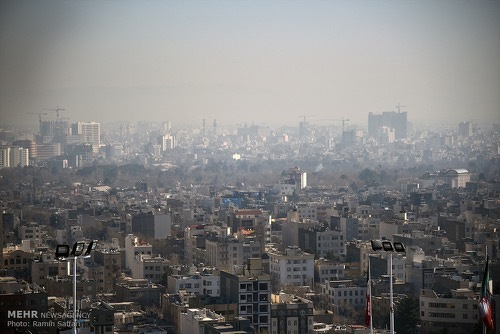
Breathing air like this: at least as bad for you as you'd expect According to the latest State of Global Air report, nearly 8 million deaths in 2023 were attributed to air pollution. Eight million people! And that’s per year!
The report goes on:
More than 90% of air pollution deaths occur in low- and middle-income countries. Countries in South Asia and most of Africa see the double burden from both outdoor and household air pollution. Death rates in these regions are often 8-10 times higher than high-income countries.
When considering diseases, the differences are similarly large. Globally, air pollution contributes to 25% of deaths due to ischemic heart disease. In most of Africa and South Asia, this number can be as high as 35% while in high-income countries, only about 7% of heart disease deaths are due to air pollution.
So congratulations to me, and probably you, for being lucky enough to live in a “high-income country” like the US. But don’t take too much comfort from that “only” number; seven percent is still a lot! It could be less than that! It could be zero! All we have to do is stop unnecessarily burning shit to power our lives.
It’s not just heart disease, either.
Exposure to air pollution has been linked with neurodegenerative diseases, such as Alzheimer’s disease and other forms of dementia. In 2023, more than 600,000 dementia deaths and 11.6 million healthy years of life lost were attributable to air pollution, with 92% of deaths occurring amongst older people (70+ years).
To repeat that: more than half a million people died of dementia in 2023 because of air pollution. Next time the monster in the White House includes the phrase “beautiful clean coal” in one of his own demented rants, think of the people in your life suffering from or already lost to afflictions like these.
So, as with climate change, there’s a clear moral distinction here. Species shouldn’t be driven to extinction, and millions of people shouldn’t be displaced due to the rapidly changing climate; likewise, people shouldn’t have to die of heart disease or dementia so that we can run our heat and A/C, drive around, and simply live our lives. That’s just wrong.
Yet there’s another argument we can use, when we must: the old, dirty ways of powering our lives are also more expensive. Relocating people displaced from flooded coastal areas will be hella expensive. Property insurance is already hella expensive (where you can still get coverage, that is) and getting more so. And we all know how expensive medical care is, with prices that will only continue to balloon.
Which brings me to this study that shows that, in the big picture, replacing dirty fuels with solar power actually saves real money in areas apart from direct power generation (emphasis mine):
The research team analyzed data from between 2014 and 2022, focusing on community health, air quality levels, the climate, and economic impact. They found that solar panels prevented 595 premature deaths that would typically be caused by poor air quality that stems from fossil fuels. When looking at 2020 in particular , the research team found that the monetary benefits were worth about half the cost of the solar panels themselves.
Put that in your payback-period pipe and smoke it! (Don’t, actually; it would only create more air pollution.)
The research team went a step further in evaluating the impact of solar panels on adjoining states, not just the states within the U.S. that imported the panels. There was a spread in the benefits, meaning that the entire region benefitted from the cleaner air because of the way air travels across the country. In the same way air pollution from wildfire smoke or power plants can move across state and country lines, so can cleaner air.
A key point of this study is that importing solar panels – even from big bad scary China – is even more worthwhile than it looks at first, but trade restrictions and a domestic solar industry are topics for another post.
That aside, the sad reality is that many of the organizations making decisions about clean power won’t even think about these impacts. Pollution is the textbook example of an “externality”, after all. The board of BigPowerCo, deciding between yet another dirty, old-fashioned gas-powered “peaker” plant, versus meeting the same demand with solar (and batteries, and wind), won’t weigh how many grandmas and grandpas will or won’t live to meet all their grandkids.
But they should consider that. Companies killing people (and the climate) by burning fossil fuels have gotten away without accounting for their externalities for a really, really long time. There are better choices, now. They’ve even become less expensive! There’s no excuse anymore.

The study cited above is from 2023, but the dangers of dirty air have been obvious since the nineteenth century. Here's coal personified, neither "clean" nor "beautiful", unleashing a demon to blight the city below with asthma, bronchitis, pneumonia, and pleurisy

It's high time to go solar